Unbundling the accelerator
Accelerators are no longer relevant. YC, Techstars, 500 Startups, and their copycats feel less like launchpads and more like abandoned malls. The signs are still up but the crowd's moved on.
What used to be a golden ticket now reads like an equity-taxing detour. YC might be the exception but even that's debatable. At this point the orange badge, is less about validating ideas and more about pricing them.
The first step? Not anymore.
The best founders don't care for the vanity, and since they are the best at what they do, the right networks tend to form naturally around them. They raise their first check through a mix of angels and small funds providing highly personalized feedback, intros and hands-on help compared to the 'one-size-fits-all' approach of most accelerators.
What accelerators offer: early capital, community, mentorship is still very much needed but has now been unbundled and redistributed across networks of operator-led syndicates, rolling funds, and micro-funds.
First Check ≠ First Round
If anything, the most lasting legacy of the accelerator era won't be the platforms nor the mafias, but rather the popularization of SAFE-like instruments which decoupled the first check from the first priced round. This generational shift opened the door to a new form of first-check investing that's now widely accepted as the standard, though its implications remain wildly under appreciated and not nearly enough debated by LPs.
Venture capital has long sold the idea that early risk equals outlier return. But as funds succeed, they scale. And as AUM scales, risk appetite shrinks. In the last cycle, early-stage managers had to show up first because there simply there was no infrastructure for anything earlier. Seed was truly the first capital, and valuations reflected that.
Today, thanks to bigger checkbooks, stronger brands, and more layers to the capital stack (to the SAFE point mentioned above), many early stage funds can afford to show up second, or even third. To nobody's surprise this has translated in seed valuations more than doubling over the last five years, with most rounds now landing between $15–$20M and many pushing past $30M in valuation. But that's not just inflation, it's reclassification.
This has led to the in-adverted consequence of pushing early stage funds to compete with multi-stage platforms: chasing breakout signals, showing up late, and deploying larger checks into companies that are mostly de-risked. Meanwhile, the real upside, zero-to-one, is happening elsewhere. Some call it pre-seed. We call it first-check.
This is what disruption looks like.
Great companies don't start at $30M of valuation. There's always a round before. Probably two. But those rounds are increasingly impractical for traditional funds, leaving the door wide open instead for networks of angels and ex-founders who have the opposite problem of larger funds, their check sizes are too small to make sense in later rounds.
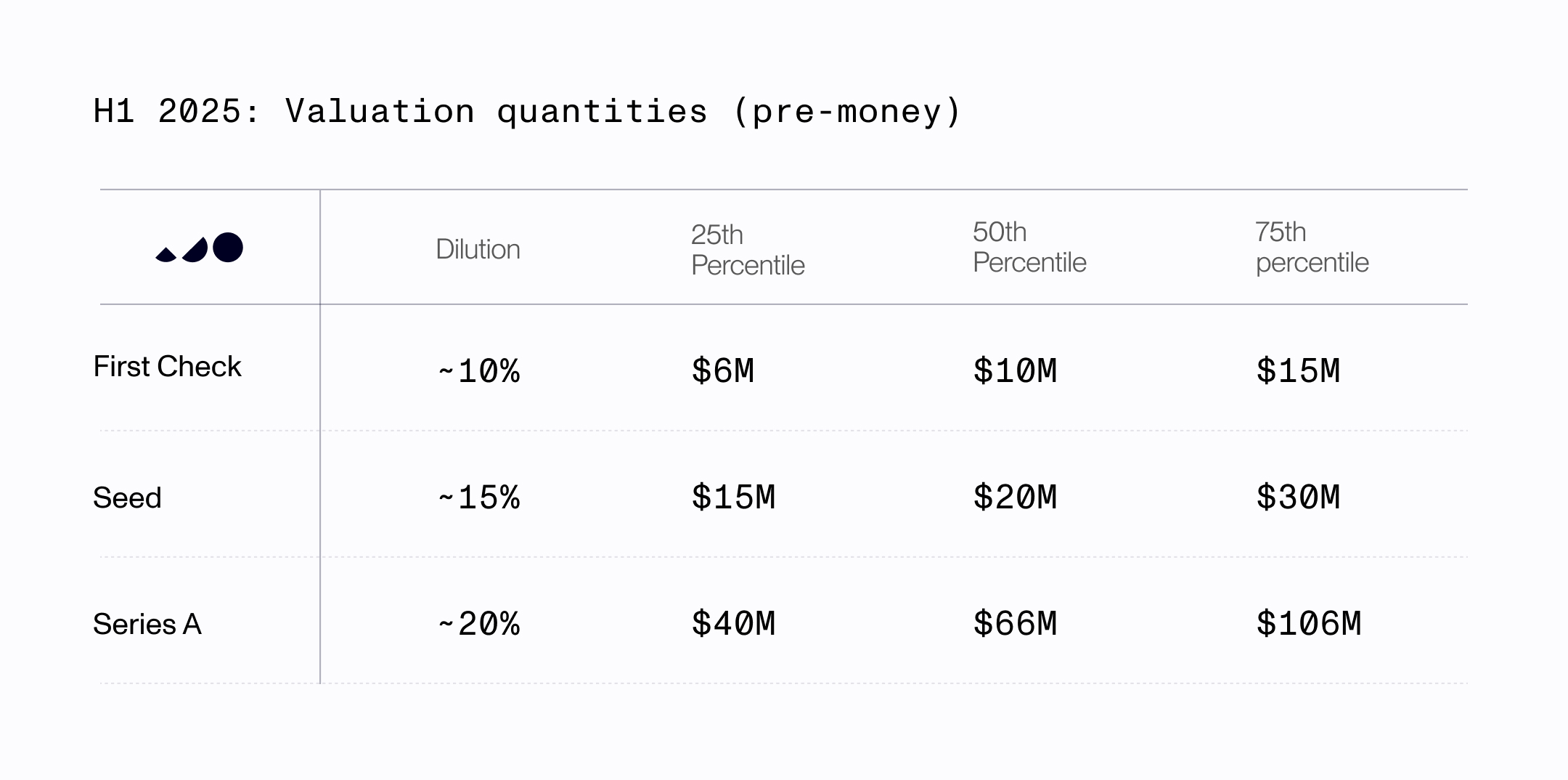
But decentralization isn't without tradeoffs. As early-stage capital fragments across hundreds of smaller players, signal becomes harder to read and diligence more subjective. For LPs, this creates real noise and strong managers get overlooked while weak ones easily slip through the filters of the old guard. The opportunity is bigger, but so is the complexity.
If you're an LP, that means you're buying in at a premium, eroding the very premise of early risk = outlier return. You're paying more for the same company your managers should have backed a year ago, if they had a smaller fund.
Those same managers are hoping to compete with multi-stage platforms that bring mature brand equity, meaningful platform value, and near-total price insensitivity. They can't win that fight by nature of still being new to the market and with unproven platforms of their own. Instead, they end up backing the companies that don't make the cut. And in a market this small, there's usually a good reason why. It's not because they were hiding in plain sight. It's adverse selection.
The alpha remains early, but early looks different now.
The next wave of early stage venture won't be won by funds with the big checkbooks trying to outsmart the multi-stage platforms at their own game. It'll be won by those who move first and back founders before it makes any sense for a big check writer to get involved.
This means smaller funds, and true value add beyond just capital and twitter platitudes. And for LPs who want to capture this slice of early stage, it's not about writing bigger checks. It's about expanding the surface area. That's the real challenge for every private investor trying to deploy into this cycle.
Just like these new breed of managers, LPs need to develop conviction earlier backing small teams with a clear edge before there's enough data to underwrite any claim of fame. That means building new diligence frameworks, accepting longer hold periods, and being willing to trade the illusion of safety for true venture returns.